What the Eye Can't See,
Thermal Imaging Reveals
A water heater burst at a beachfront hotel in Virginia Beach, VA. From the outside, nothing looked wrong. Our drone's thermal camera told a completely different story — mapping hidden moisture damage across multiple floors and wall cavities.
Thermal Color Scale
Frame Set #139
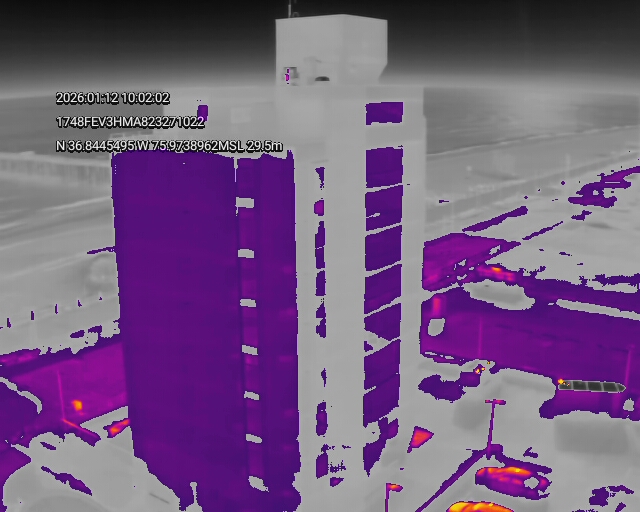
Captured at 10:02:02 · Altitude: 29.5m
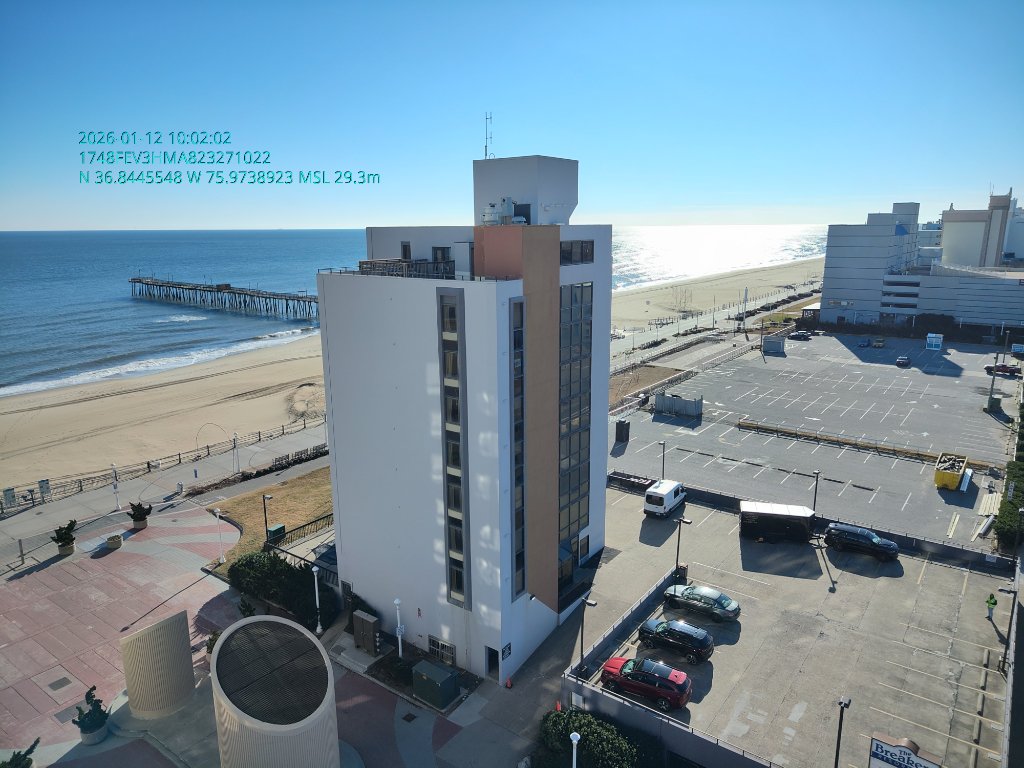
Standard aerial view shows a typical multi-story building facade — no visible signs of damage, moisture, or anomalies to the naked eye.
Thermal reveals significant heat signatures concentrated on the left facade panels and lower structure, suggesting retained heat from moisture saturation — consistent with internal water migration from the burst water heater.
Frame Set #140
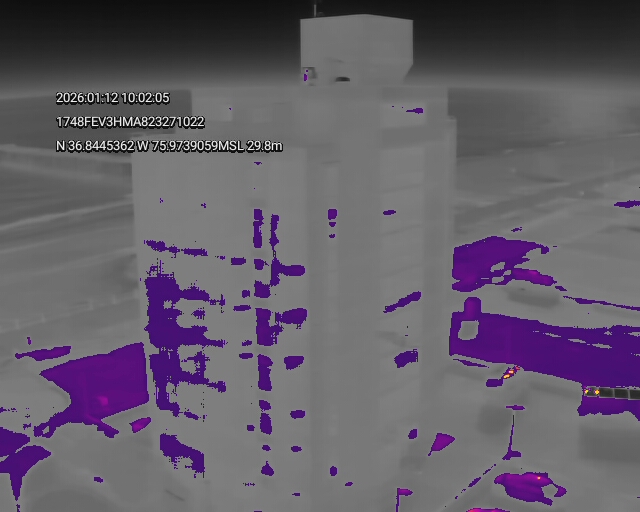
Captured at 10:02:05 · Altitude: 29.5m
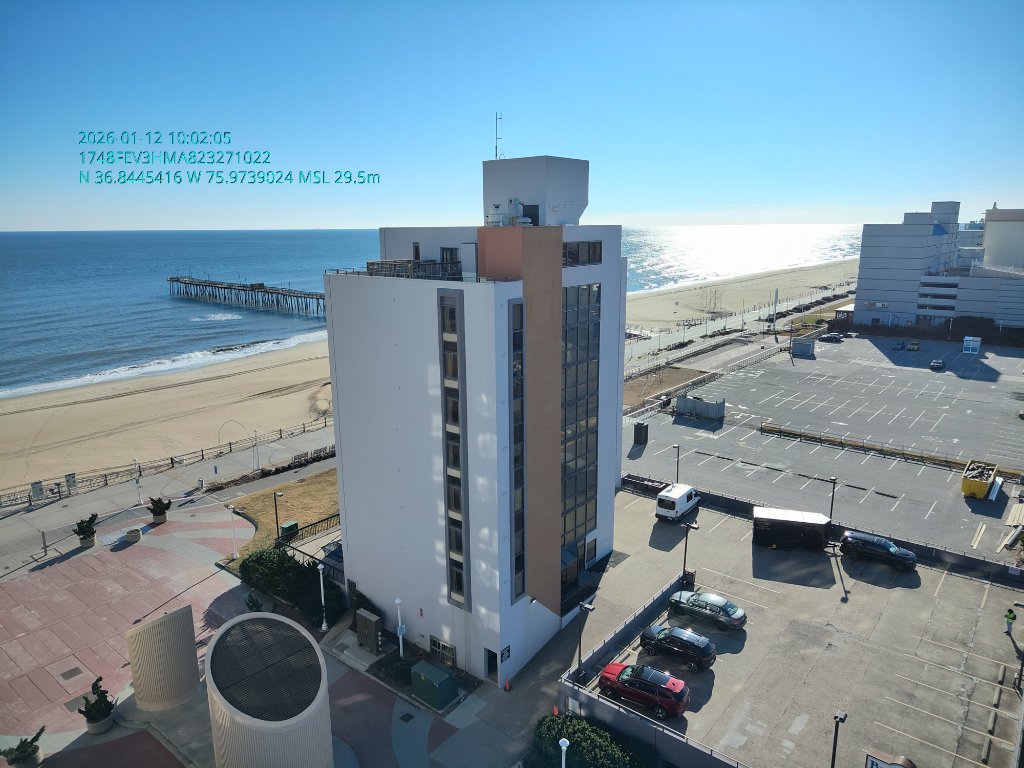
Clean visual — building appears structurally sound with no surface staining or visible water intrusion from this angle.
Thermal imaging exposes wide purple/violet zones across left and center building sections indicating moisture-affected insulation and walls. Large thermal mass imbalance visible, pointing to water saturation within wall cavities.
Frame Set #141
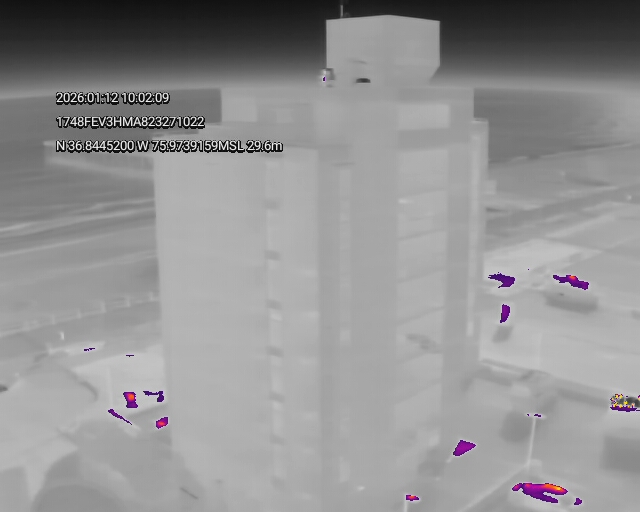
Captured at 10:02:09 · Altitude: 29.7m
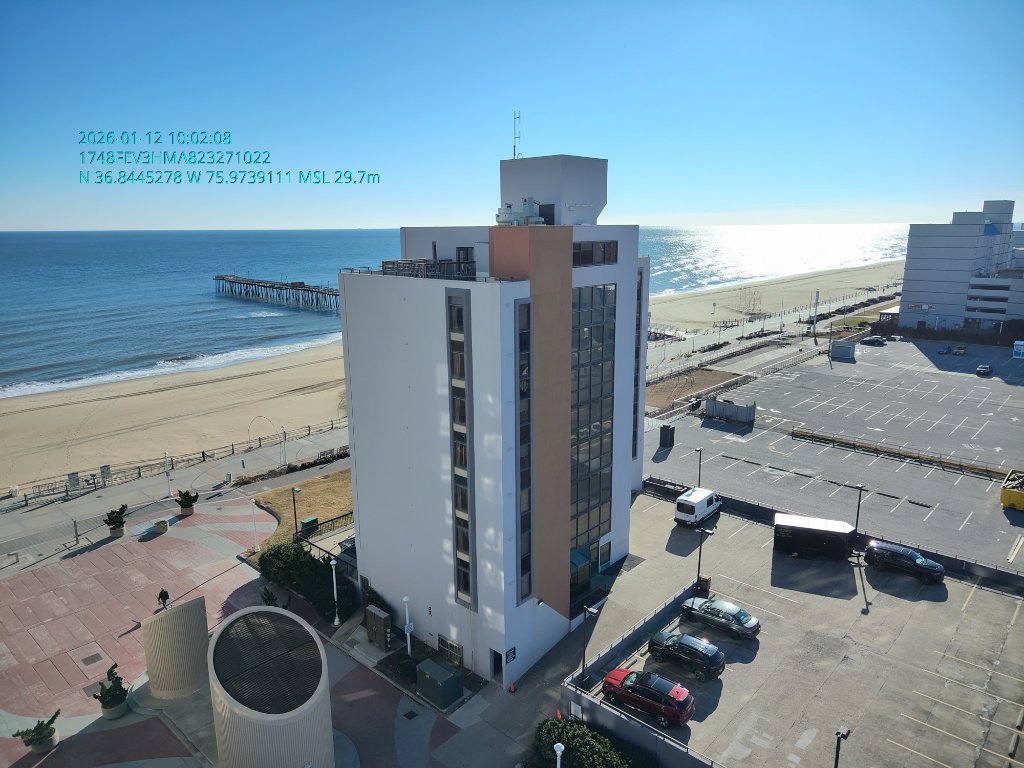
Visually, the building looks normal. No water stains, cracks, or exterior damage visible from this vantage point.
Thermal shows scattered heat anomalies — small red/orange pockets near ground level and parking area indicate localized heat spots, possibly from water pooling on warm pavement. Building walls show cool moisture pockets (purple).
Frame Set #142
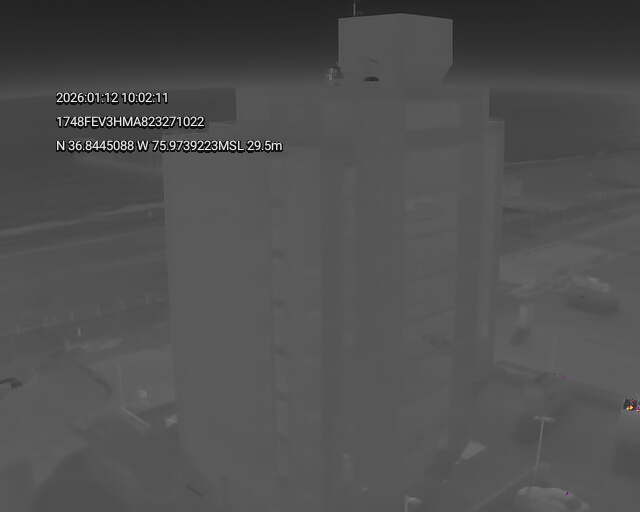
Captured at 10:02:11 · Altitude: 29.5m
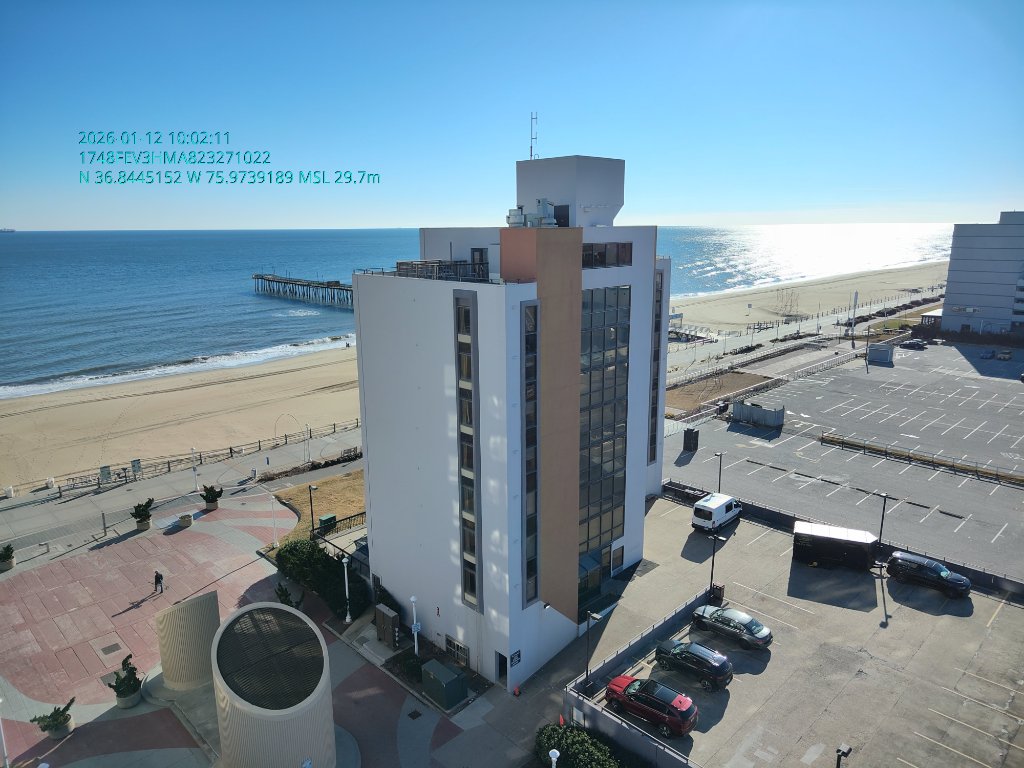
Normal visual appearance. Facade, windows, and surrounding area all look undisturbed from the naked eye.
This thermal frame shows minimal heat anomaly — the building structure appears relatively uniform in temperature. This baseline comparison confirms the contrast seen in other frames is anomalous, not environmental.
Frame Set #143
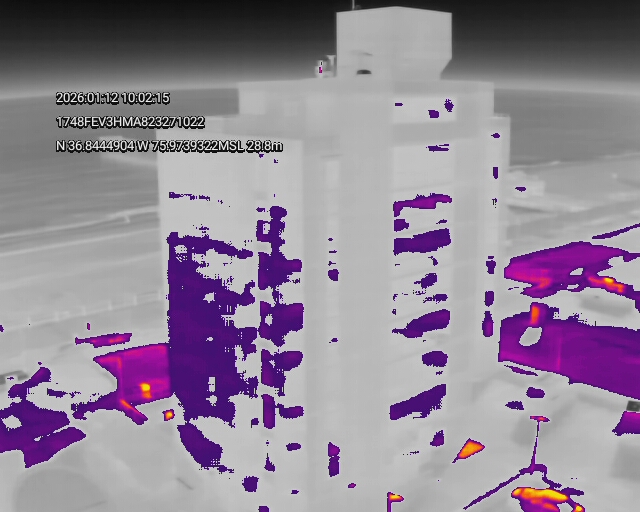
Captured at 10:02:15 · Altitude: 28.8m
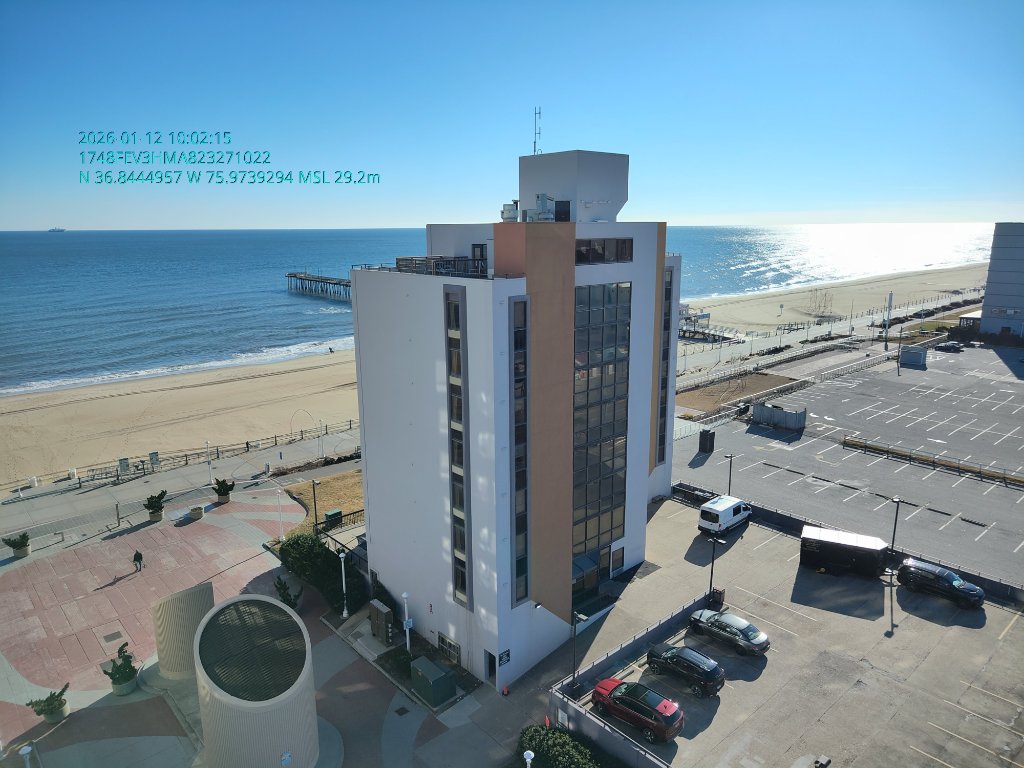
From this angle, the full building face is visible. No discoloration, efflorescence, or external water damage marks are apparent.
Strong thermal contrast detected — the left wing of the building shows deep purple (cool moisture retention) across multiple floor levels. A concentrated bright orange pocket near lower-left is a critical hotspot, potentially indicating the area closest to the water heater discharge path.
Frame Set #144
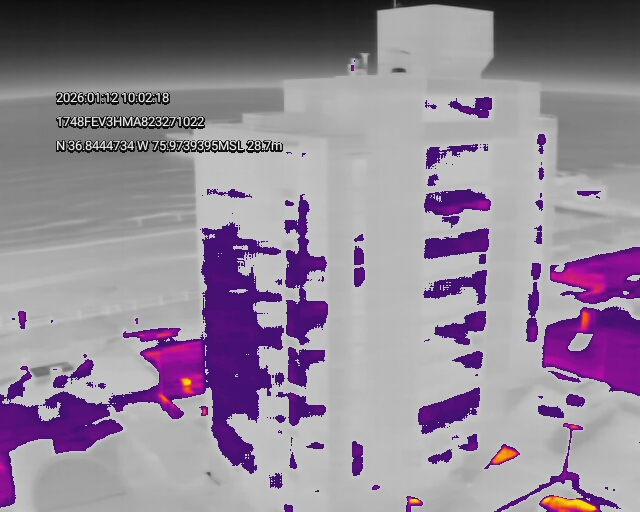
Captured at 10:02:18 · Altitude: 28.6m
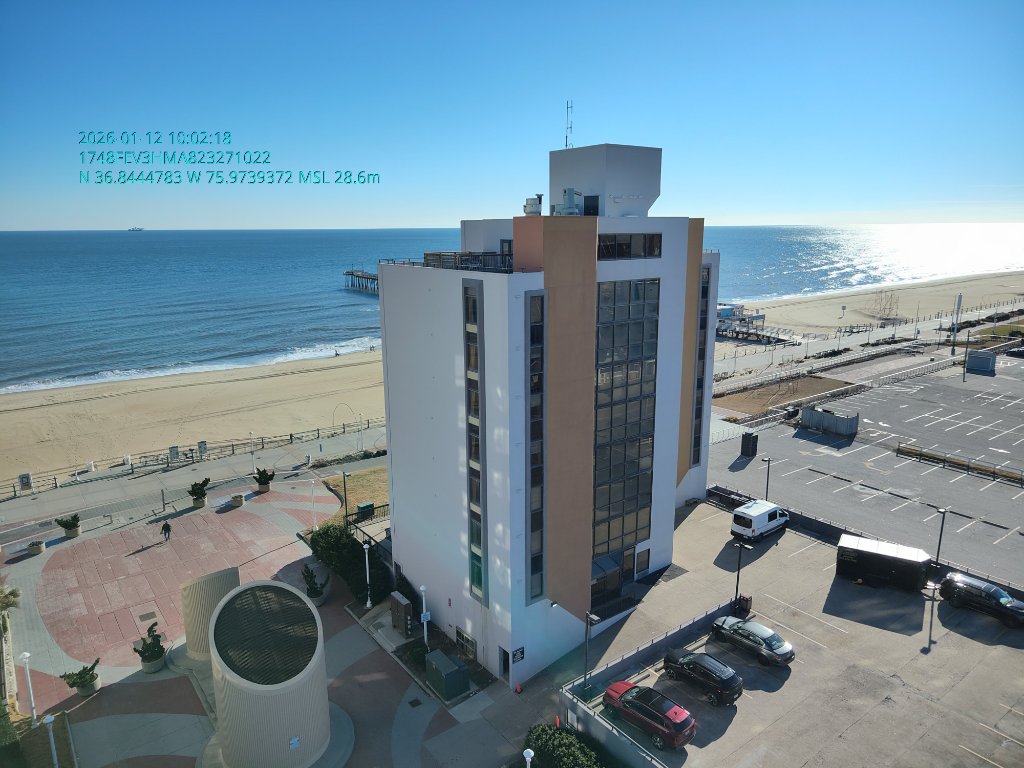
Clear, standard visual. Building exterior appears well-maintained with no signs of distress observable without thermal tools.
Thermal reveals a dramatic large dark purple zone spanning the lower half of the left structure — indicating extensive moisture saturation. This is the most telling indicator of water migrating downward through wall assemblies from the burst.
Frame Set #145
Captured at 10:02:22 · Altitude: 28.6m
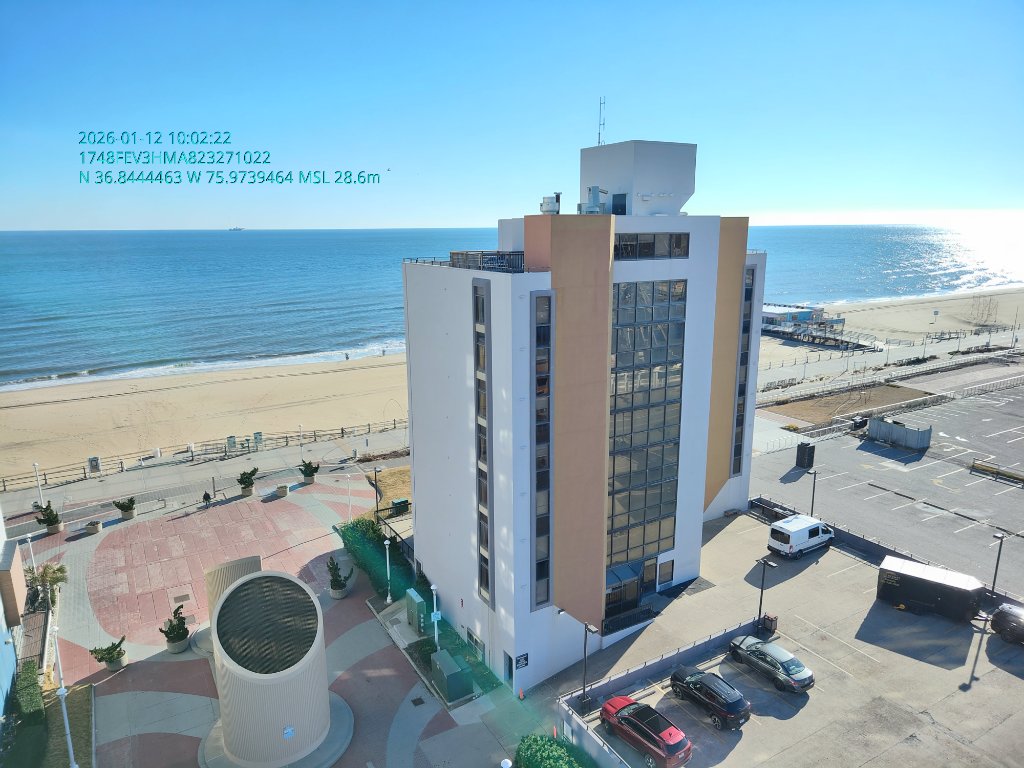
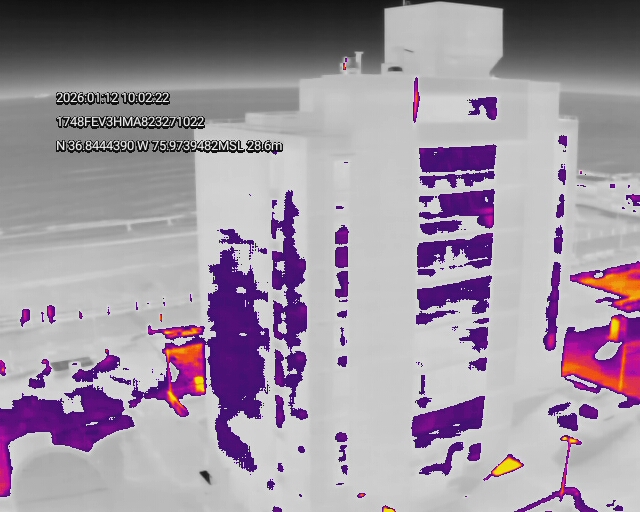
Normal visual capture showing clean white and tan facade with no observable defects or water markings.
One of the most significant frames — a massive dark purple moisture plume spans the entire left building section from mid-rise down to grade level. Bright orange flares at base confirm active warm water pooling or discharge. The pattern unmistakably traces the water heater burst migration path.
Frame Set #146
Captured at 10:02:26 · Altitude: 28.6m
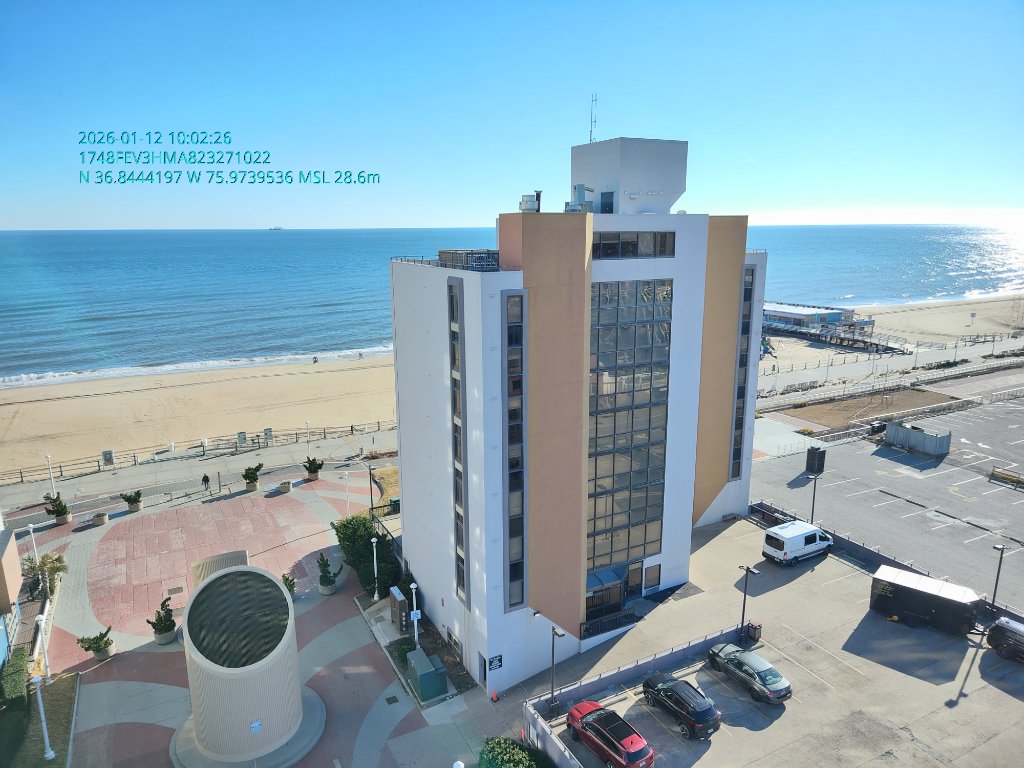
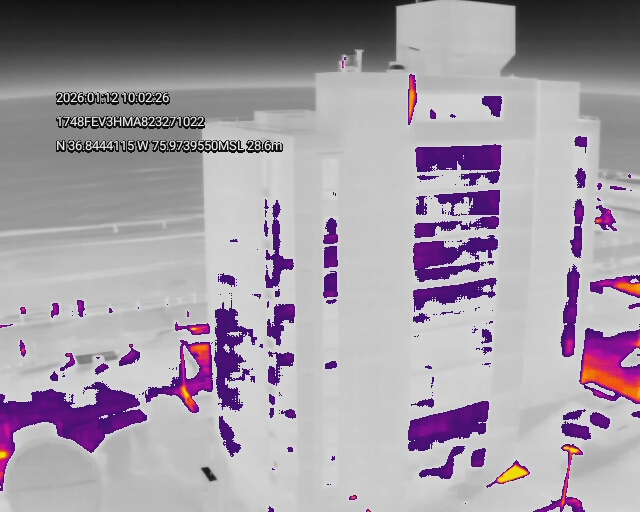
Another clean visual with the building showing no surface-level evidence of the water damage beneath the exterior finish.
Thermal continues to show the affected left section with patchy moisture distribution across multiple floors. The irregularity of the pattern (rather than uniform) suggests water has spread horizontally within wall cavities — classic sign of saturated insulation.
Frame Set #147
Captured at 10:02:30 · Altitude: 28.6m
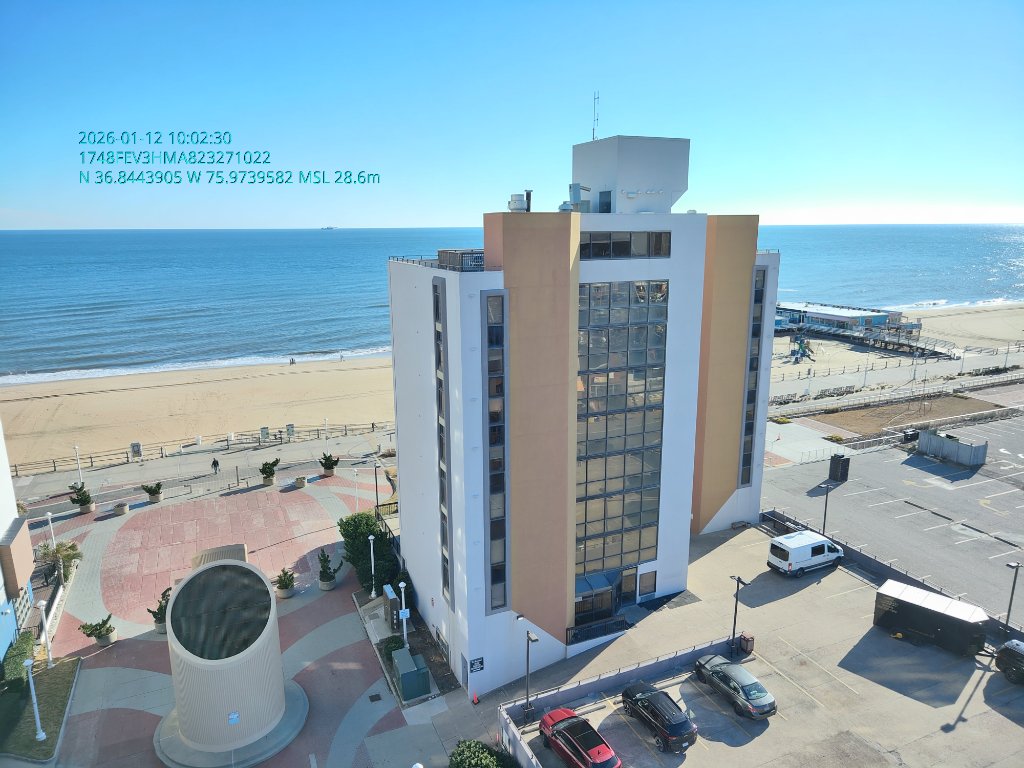
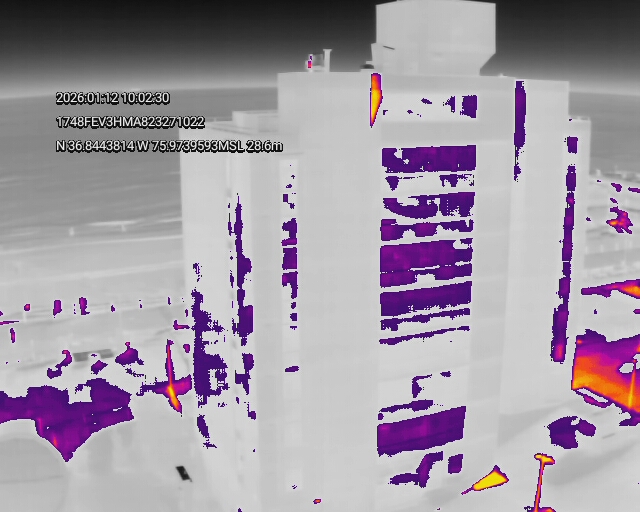
Standard aerial. Building and surroundings look normal. No pooling water, staining, or structural changes visible.
This frame captures a shift in perspective revealing thermal anomalies now appearing on the right facade section as well. The right-side warm signatures (orange/yellow) in lower corners suggest water has traveled to adjacent areas — the damage footprint is larger than initially apparent.
Frame Set #148
Captured at 10:02:33 · Altitude: 28.5m
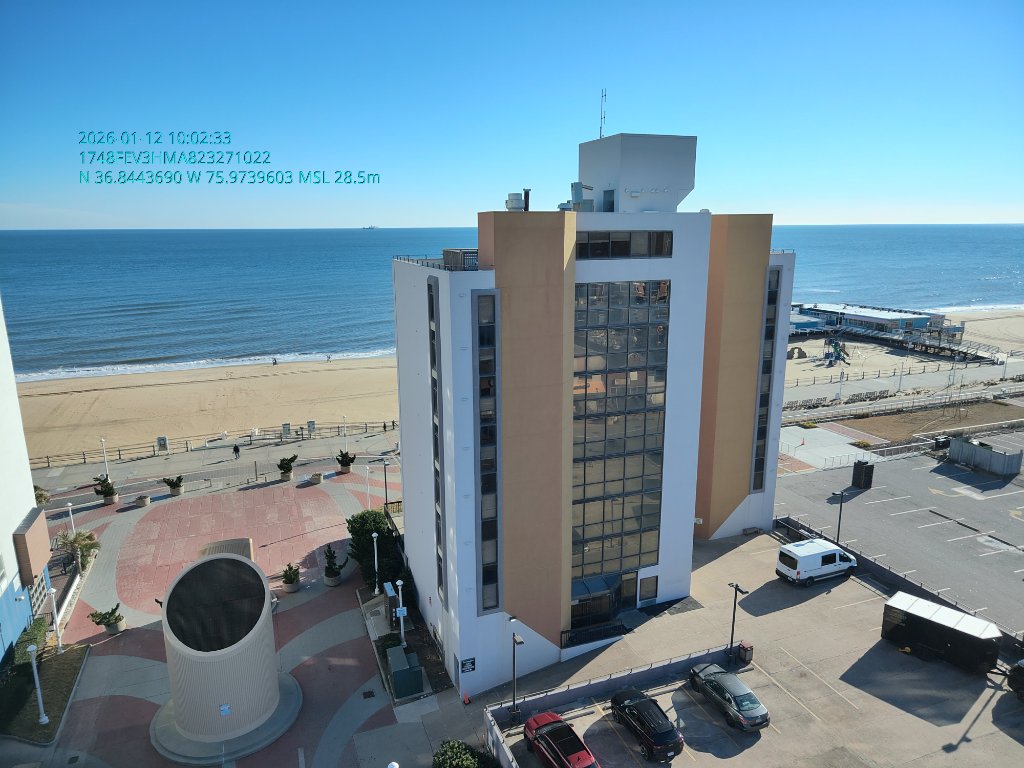
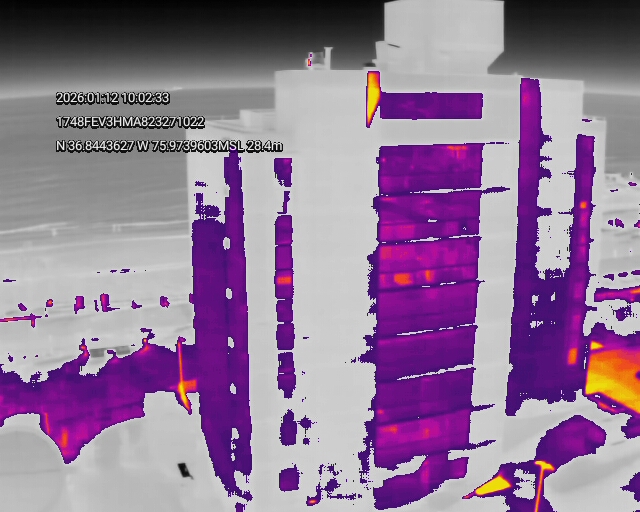
Clear visual of the building's front-facing facade. All appears normal — the extent of subsurface damage remains completely invisible.
Thermal imaging here provides the clearest building-wide view of the damage. The center building facade shows scattered moisture anomalies, while lower base areas show consistent elevated thermal mass — indicating water has reached the foundation perimeter.
Frame Set #149
Captured at 10:02:37 · Altitude: 28.5m
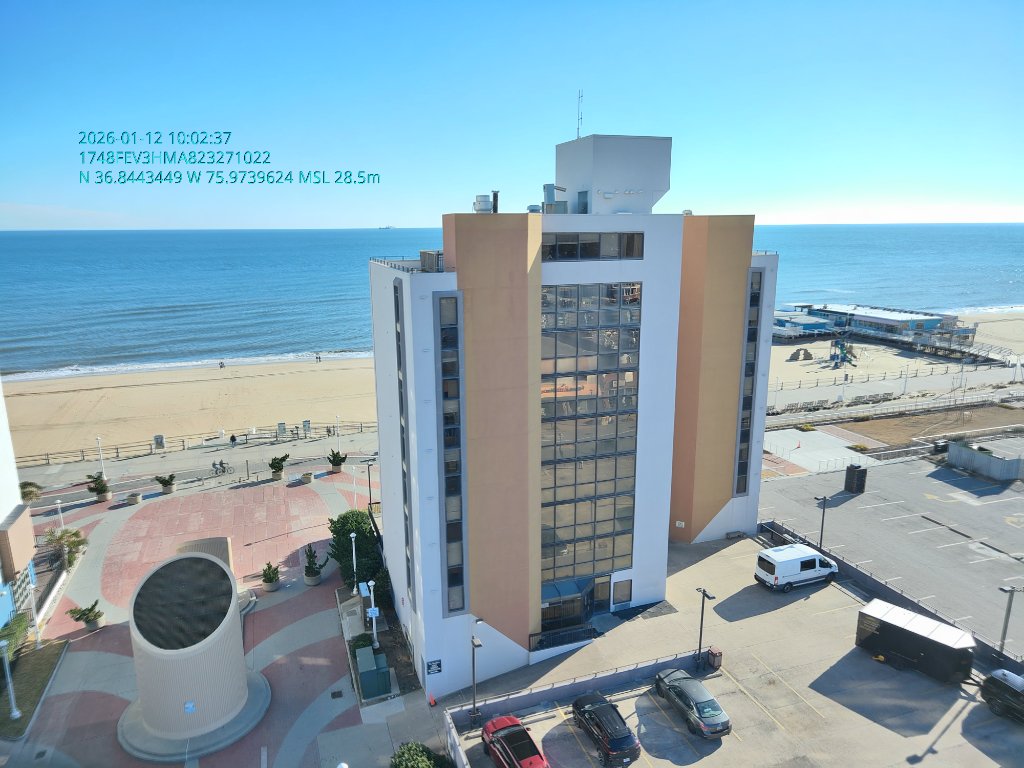
Building facade and surrounding landscape appear clean and undamaged to the naked eye.
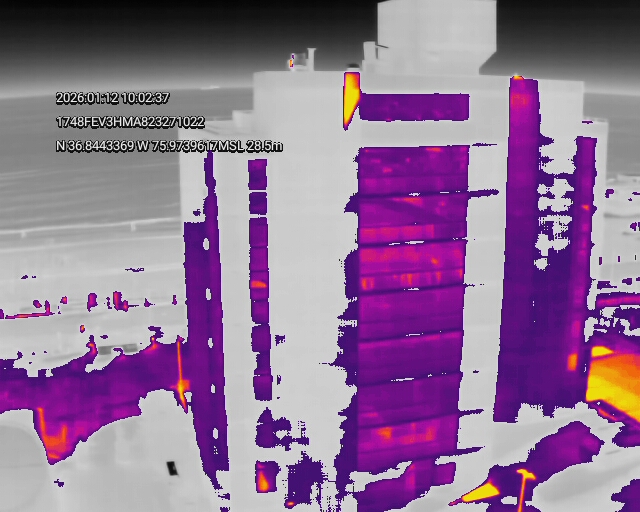
Thermal reveals a concentrated band of heat anomalies across the upper-center sections of the building — bright orange near roofline equipment suggests possible thermal bridging or moisture in roof assemblies, in addition to the wall cavity saturation below.
Frame Set #150
Captured at 10:02:40 · Altitude: 28.4m
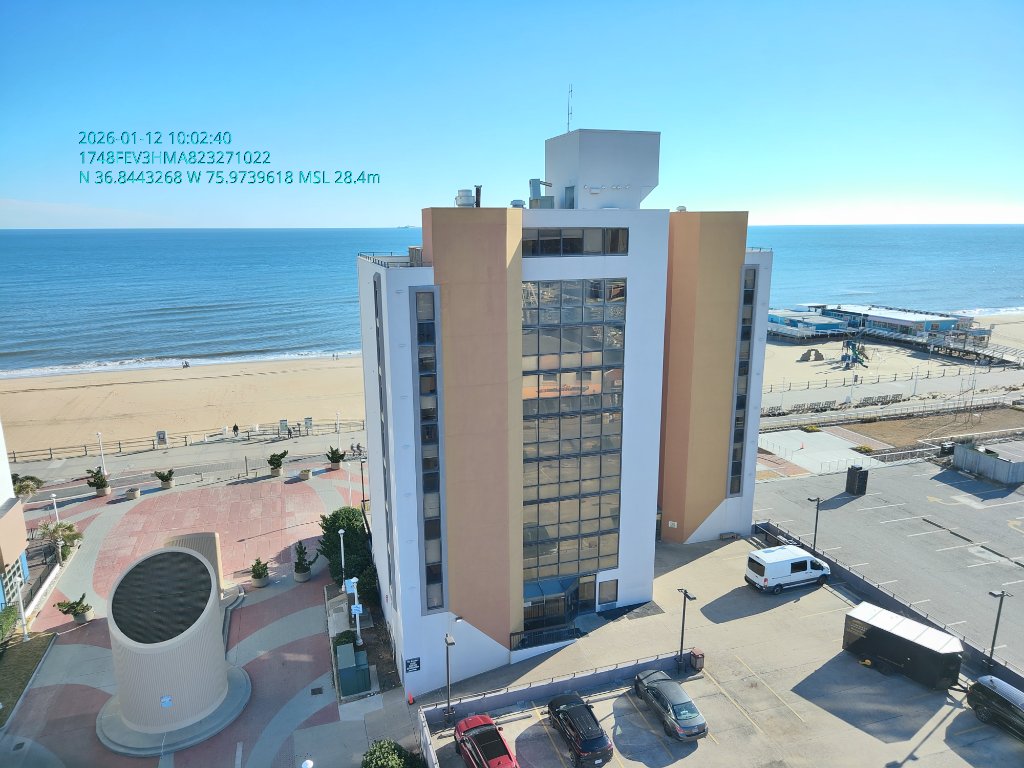
Final orbital pass — visual confirms pristine exterior. Without thermal imaging, an adjuster or inspector on the ground would find no evidence of the extensive internal water damage.
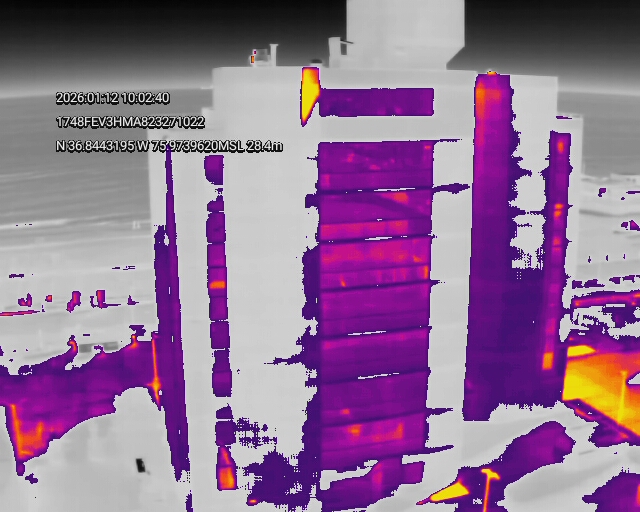
This frame reinforces the cumulative thermal evidence — moisture anomalies visible across left, center, and right sections confirm damage has spread through multiple wall assemblies. The pattern from all frames combined maps the full extent of the water heater burst impact.
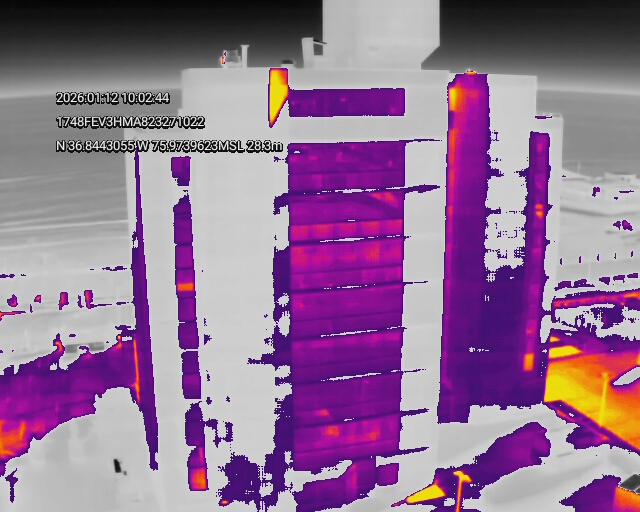
Frame Set #151
Captured at 10:02:44 · Altitude: 28.3m
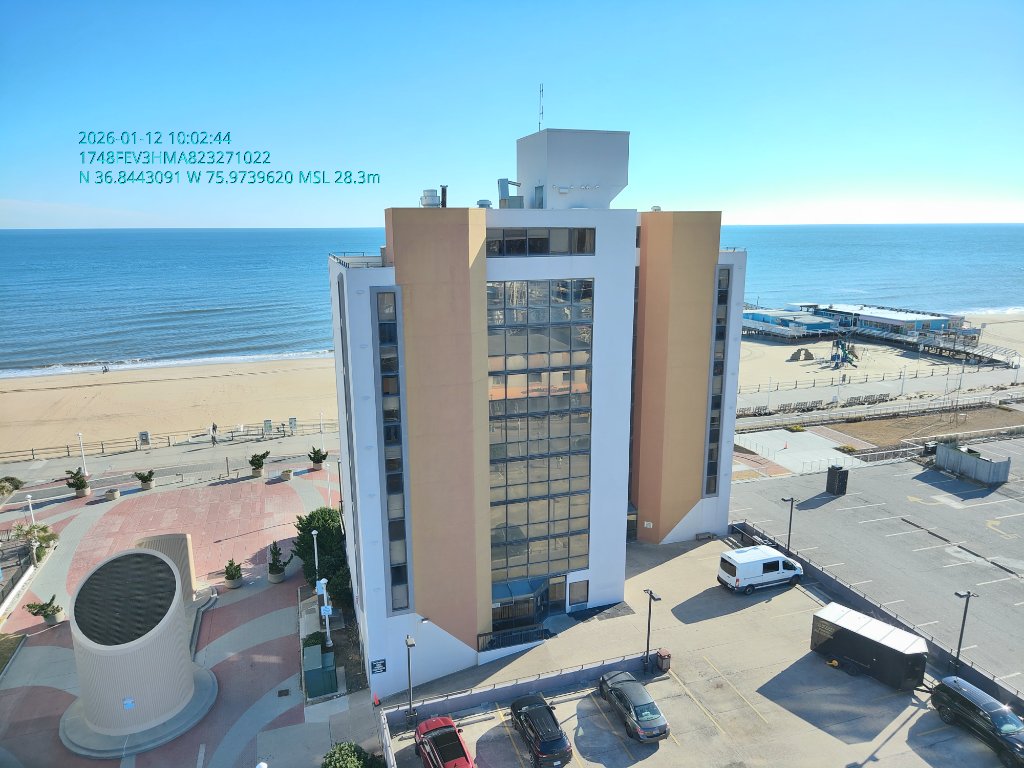
Final frame in the sequence. Building exterior is clean, organized, and shows absolutely no visible signs of the documented internal damage.
The closing thermal frame confirms sustained moisture signatures across the building's thermal envelope. The entire left wing continues to show deep moisture saturation (purple) while base-level orange hotspots confirm active warm water presence — the water heater damage is definitively documented.
The Verdict: Hidden Damage. Documented.
Across all 13 image pairs, the visual camera revealed a perfectly normal-looking building exterior. The thermal camera revealed a completely different reality — extensive moisture migration through wall assemblies, saturated insulation across multiple floors, and active warm water discharge at the building base. All stemming from a single burst water heater, invisible to any ground-based inspection.
Invisible to Ground Inspection
No surface staining, cracks, or visible water — a standard inspection would have missed all of it.
Multi-Floor Moisture Spread
Thermal evidence shows water migrated through wall cavities across at least 8 floors of the structure.
Documented for Claims
Every frame is GPS-tagged, timestamped, and altitude-recorded — courtroom and adjuster ready.